



What is the Endothelial Glycocalyx (EGX)?
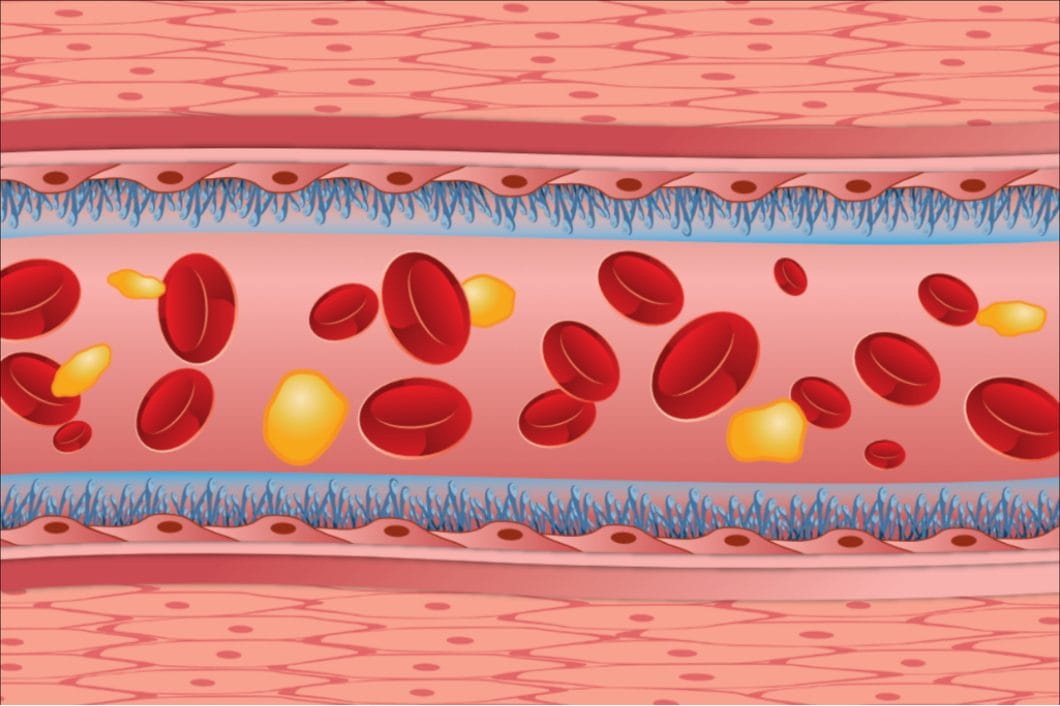
Key Facts: The Endothelial Glycocalyx at a Glance
- What it is: A delicate, gel-like coating (typically 0.5–5 micrometers thick) lining all 60,000 miles of blood vessels in the human body
- Primary functions: Protects blood vessel walls, regulates vascular permeability, supports nitric oxide signaling for healthy blood flow, and acts as a selective barrier*
- Why it matters: A healthy EGX is essential for optimal circulation, which supports brain health, energy levels, organ function, and overall vitality*
- What damages it: High-glycemic diets, chronic stress, inactivity, smoking, disregulated sleep hygiene, and other conditions.
- How to support it: A low-glycemic and low sodium diet, regular movement, stress management, and targeted dietary supplements like Arterosil HP® with MonitumRS®*
Health and vitality begin with healthy circulation, and healthy circulation is only possible with a healthy vascular system. Healthy circulation supports sharp thinking, steady energy, and the comfort to stay active as you age.
At the core of a healthy vascular system is the endothelial glycocalyx (EGX), the recently discovered micro-thin gel lining in your veins, arteries, and capillaries. A healthy glycocalyx shields and regulates the entire vascular system.
Article Overview
This article explains what the endothelial glycocalyx (EGX) is, how it works, why it matters, and practical steps to support it. It also provides an overview of Arterosil HP, a science-backed glycocalyx support featuring MonitumRS from Calroy Health Sciences.*
Helpful pronunciation guide and definitions:
- Blood vessels: Blood vessels comprise all 60,000 miles of vasculature in your body. Every single vein, artery, and microcapillary in your body is considered a blood vessel.
- Endothelium: (EN-doh-THEE-lee-um) – refers to the thin layer of cells that line the blood vessels
- Glycocalyx: (GLY-koh-kay-liks) – A micro-thin protective layer between the endothelium and the blood, that is the first line of defense for the endothelium and the entire vascular system.
Helpful tip: If you are a healthcare provider, check out our guide to explaining the endothelial glycocalyx to individuals in your clinic.
Does the endothelial glycocalyx (EGX) matter?
Before diving into the endothelial glycocalyx, It is first important to understand the importance of a healthy vascular system, or healthy circulation and blood flow. The health of every single organ and cell in the body relies on healthy blood flow to work optimally. This includes the health of your brain, sexual organs, kidneys, metabolic system, skin, hair, joints, and any other aspect of human health you can imagine.
This is because the vascular system is responsible for delivering the blood, nutrients, oxygen, and hormones every organ and cell relies on to do their job.
The vascular system consists of 60,000 miles of blood vessels inside the body, which is enough to circle the earth multiple times. The first line of defense that protects and supports this massive vascular system is the endothelial glycocalyx (EGX). Without a healthy endothelial glycocalyx, the vascular system cannot function well, and without a healthy vascular system, no organs, muscles or cells can work well either.*
What is the endothelial glycocalyx (EGX) in simple terms?
Think of the endothelial glycocalyx (EGX) as the body’s ultra-smart vascular lining: an active, protective blood vessel barrier that helps maintain smooth blood flow, balanced fluid exchange, and vascular protection.
Each and every one of the 60,000 miles of veins, arteries, and capillaries inside the human body are lined with the endothelial glycocalyx.
The endothelial glycocalyx acts as a shield and gatekeeper, protecting blood vessel walls and helping regulate what passes in and out of the bloodstream. In everyday language, it’s the vessel’s protective bouncer—the front line of vascular protection and a finely tuned barrier that keeps circulation moving smoothly.
Helpful analogies for understanding the protective role of the EGX:
- A healthy EGX is like a perfectly paved set of roads from highways to neighborhoods and the center of town. Perfectly paved roads allow smoother delivery of packages to homes and businesses. The perfectly paved roads allow smooth delivery of oxygen and nutrients to every organ and system.*
- A seaweed-like or slippery gel lining layer inside of your blood vessels that supports healthy blood flow and protects your blood vessel walls.*
- A smart bouncer for your vascular system, determining what is allowed to pass through the artery walls and what stays in the bloodstream.*
How does the endothelial glycocalyx work? What are the key functions?
The EGX works as both a physical barrier and a signaling hub—crucial for everyday vascular function and overall health. It supports in the following ways:*
- Acts as the first line of defense for blood vessels: The EGX is an intelligent and selective barrier that helps protect every blood vessel wall.*
- Supports healthy circulation: A healthy endothelial glycocalyx supports vasodilation, which allows blood vessels to widen and constrict on demand to move blood to its intended target.*
- Supports blood pressure in the normal range*
- Supports the delivery of oxygen and nutrients throughout the body: Nearly every organ, system and cell in the body rely on healthy blood flow to work well.
At a glance, the EGX performs critical functions, including:*
- Protects blood vessels
- Shields sensitive barriers like the blood-brain barrier*
- Stores protective compounds that support repair and resilience*
- Regulates what passes into vessel walls*
- Triggers the signalling molecule that helps vessels relax so that blood can flow can reach its intended targets*
When the glycocalyx is strong and healthy, circulation is positively impacted and every organ feels the impact. A healthy endothelial glycocalyx helps support healthy kidney function, brain health, metabolic function and more.*
Why is the endothelial glycocalyx (EGX) vital for vascular and overall health?
Circulation and blood flow supports every single organ and tissue in the body, so the effects of healthy circulation are widespread. The endothelial glycocalyx is a key part of that healthy system. How a well-supported glycocalyx may feel in daily life:*
- Less fatigue after routine exercise*
- Comfortable, warm fingers and toes*
- Clearer thinking*
- Healthy sexual function
Health and vitality begin with your vascular system. Healthy circulation supports sharp thinking, steady energy, and the comfort to stay active as you age.
A healthy EGX is fundamental to well-functioning circulation: it supports a strong capillary barrier, smooth blood flow, and balanced signaling. These are key elements of vascular and overall wellbeing. When robust, the EGX helps support every single organ, system and cell in the body by supporting the proper delivery of oxygen and nutrients they need to function.
Because every organ depends on efficient circulation, supporting the EGX is a practical way to support the body’s foundational system for daily energy, exercise capacity, mental clarity, and overall resilience.*
What are factors that can affect the endothelial glycocalyx (EGX)?
The EGX is extremely delicate and impacted by many factors. The good news is that it is also very resilient, and can be rebuilt quickly with the right support.
Common stressors include:
- Not getting enough daily or weekly movement
- Excess processed sugar and elevated sodium intake
- Intense physical or emotional stress
- Inconsistent or dysregulated sleep hygiene
How to support the endothelial glycocalyx (EGX)
Actionable ways to help support and maintain EGX integrity and function:
- Eat a low-glycemic, low-salt diet like the DASH diet
- Eat a diverse, plant-forward diet high in antioxidants, polyphenols and omega-3s
- Prioritize regular movement and aim for 150 minutes of moderate activity per week
- Manage stress and stay connected to community
- Consider science-backed dietary supplements like Arterosil HP with MonitumRS*
For step-by-step guidance, explore Calroy’s resources on practical EGX support, including 6 Essential Steps to Protect Your Endothelial Glycocalyx.
What role does Arterosil HP® have in endothelial glycocalyx support?*
Arterosil HP® is uniquely powered by MonitumRS®, a patented extract of rhamnan sulfate from a rare green seaweed sustainably harvested in the Pacific Ocean. Rhamnan sulfate is a powerful glycocalyx-regenerating compound (GRC). MonitumRS® helps restore and protect the endothelial glycocalyx—supporting circulation, vascular integrity, and the health of every organ and system.* MonitumRS has been scientifically shown to protect and restore the endothelial glycocalyx, as demonstrated in an independent third-party laboratory in vitro study.*†
To enhance its effects, Arterosil HP® includes a blend of fruit, vegetable, and green tea extracts selected for their vascular-supportive and antioxidant properties.* These compounds complement the glycocalyx-regenerating activity of MonitumRS®.
Every batch of Arterosil HP® is produced under Calroy’s Total Quality System, with strict compliance to FDA-defined current Good Manufacturing Practices (cGMP). Batch and test records are maintained to ensure guaranteed purity, potency, and quality.
For an evidence overview and clinical discussion of Arterosil HP with MonitumRS, see Calroy’s educational review Why Arterosil HP with MonitumRS is the Best Endothelial Glycocalyx Support.
Is there research behind Arterosil HP with MonitumRS and rhamnan sulfate from Monostroma nitidum?
Arterosil HP uniquely contains MonitumRS, a patented extract of rhanman sulfate from Monostroma nitidum. In an independent, third-party laboratory in vitro study, MonitumRS was scientifically shown to protect and restore the endothelial glycocalyx up to 103.8% of baseline after just 24 hours.*† A published, human case series that measures key vascular health metrics on individuals using Arterosil HP is also available.
Rhanman sulfate from Monostroma nitidum is a unique, algae-derived sulfated polysaccharide (seaweed) with structural features that can mimic and support key aspects of the endothelial glycocalyx matrix. A growing body of peer-reviewed research on rhamnan sulfate points to reinforcement of EGX structure, improved vascular barrier characteristics, and a favorable safety profile in studied settings.
Key Takeaway: The endothelial glycocalyx is the essential supportive lining of all blood vessels that enables healthy circulation. Supporting it through diet, movement, stress management and targeted supplements is one of the most foundational steps you can take for whole-body health.*
Frequently Asked Questions
What is the endothelial glycocalyx?
The endothelial glycocalyx is a thin, gel-like layer made of proteins and sugars that coats the inside of blood vessels, helping protect vessel walls and regulate blood flow and fluid balance.
How does the glycocalyx protect blood vessels?
The glycocalyx acts like a selective and protective barrier, limiting direct contact between blood components and the vessel wall while regulating what can pass into surrounding tissues.
Can lifestyle factors impact the endothelial glycocalyx?
Yes. Diets high in processed sugars or sodium, inactivity, and chronic stress can challenge the EGX, while a colorful plant-dense diet, omega-3s, and regular movement support it. The EGX is delicate yet resilient with the right support.
What makes Arterosil HP unique for glycocalyx support?
Arterosil HP contains MonitumRS, a patented extract of rhamnan sulfate from Monostroma nitidum, scientifically shown to protect and restore the endothelial glycocalyx, as demonstrated in an independent third-party laboratory in vitro study.*
Is there research supporting the benefits of rhamnan sulfate from Monostroma nitidum?
Yes. Numerous peer-reviewed studies highlight rhamnan sulfate’s properties relevant to endothelial glycocalyx support and vascular health, with a favorable safety profile in examined contexts.
Is there research behind Arterosil HP with MonitumRS?
Yes, in an independent, third-party laboratory in vitro study, MonitumRS was scientifically shown to protect and restore the endothelial glycocalyx up to 103.8% of baseline after just 24 hours.*† A published case series on Arterosil HP measuring key vascular health metrics is also available.
For an in-depth and scientifically rigorous context on structure and function, see this comprehensive review on EGX biology and dynamics from the National Institutes of Health archive.
References
Burke KL, Jennings IG. The Effect of a Dietary Supplement Containing Rhamnan Sulfate from Monostroma nitidum on Carotid Atherosclerotic Plaque: A Case Series. Integr Med (Encinitas). 2023 Dec;22(6):30-37. PMID: 38404609; PMCID: PMC10886398.
Foote CA, Soares RN, Ramirez-Perez FI, Ghiarone T, Aroor A, Manrique-Acevedo C, Padilla J, Martinez-Lemus L. Endothelial Glycocalyx. Compr Physiol. 2022 Aug 23;12(4):3781-3811. doi: 10.1002/cphy.c210029. PMID: 35997082; PMCID: PMC10214841.
Elagizi A, Lavie CJ, O’Keefe E, Marshall K, O’Keefe JH, Milani RV. An Update on Omega-3 Polyunsaturated Fatty Acids and Cardiovascular Health. Nutrients. 2021;13(1). doi:10.3390/nu13010204
Norouzi H, Ziaie N, Saravi M, et al. Association of vitamin D deficiency and premature coronary artery disease. Caspian J Intern Med. 2019;10(1):80-85. doi:10.22088/cjim.10.1.80
Lin G, Siddiqui R, Lin Z, et al. Blood glucose variance measured by continuous glucose monitors across the menstrual cycle. npj Digit Med. 2023;6(1):1-8. doi:10.1038/s41746-023-00884-x
Cutler BR, Gholami S, Chua JS, Kuberan B, Babu PVA. Blueberry metabolites restore cell surface glycosaminoglycans and attenuate endothelial inflammation in diabetic human aortic endothelial cells. Int J Cardiol. 2018;261:155-158. doi:10.1016/j.ijcard.2018.03.027
Dou L, Jourde-Chiche N. Endothelial Toxicity of High Glucose and its by-Products in Diabetic Kidney Disease. Toxins (Basel). 2019;11(10):578. doi:10.3390/toxins11100578
Pascual-Morena C, Cavero-Redondo I, Martínez-García I, et al. Exploring the Influence of Insulin Resistance on Arterial Stiffness in Healthy Adults: From the Metabolic and Cardiovascular Health Insights of the EVasCu Study. Nutrients. 2024;16(6):791. doi:10.3390/nu16060791
Longo VD, Anderson RM. Nutrition, longevity and disease: From molecular mechanisms to interventions. Cell. 2022;185(9):1455-1470. doi:10.1016/j.cell.2022.04.002
Araújo J, Cai J, Stevens J. Prevalence of Optimal Metabolic Health in American Adults: National Health and Nutrition Examination Survey 2009–2016. Metabolic Syndrome and Related Disorders. 2019;17(1):46-52. doi:10.1089/met.2018.0105
Dhingra R, Sullivan LM, Fox CS, et al. Relations of serum phosphorus and calcium levels to the incidence of cardiovascular disease in the community. Arch Intern Med. 2007;167(9):879-885. doi:10.1001/archinte.167.9.879
Fodor D, Albu A, Poantă L, Porojan M. Vitamin K and vascular calcifications. Acta Physiol Hung. 2010;97(3):256-266. doi:10.1556/APhysiol.97.2010.3.2
Kim JH, Auger C, Schini-Kerth VB. Activation of eNOS by polyphenol-rich products and polyphenolic compounds. Curr Pharm Des. 2014;20(22):3521-3529. doi:10.2174/13816128113196660751
Harding IC, Mitra R, Mensah SA, Nersesyan A, Bal NN, Ebong EE. Endothelial barrier reinforcement relies on flow-regulated glycocalyx, a potential therapeutic target. Biorheology. 2019;56(2-3):131-149. doi:10.3233/BIR-180205
